
The PechaKucha hack
Concise, human-centered storytelling might be the key to unlocking your team

Some of the most powerful leadership tools don’t look like leadership tools at all.
Love him or hate him, J.J. Redick (L.A. Lakers coach) has an element of his leadership philosophy that I really like.
When he became the head coach of the Lakers, he didn’t just roll out new sets and defensive schemes. He brought in new habits and experiments for how the team would connect. One of the most interesting? A quirky storytelling format called PechaKucha.
PechaKucha (Japanese for “chit-chat”) is simple and brutal in the best way: 20 slides, 20 seconds each. No pausing, no rambling, no going down a rabbit hole. The deck moves whether you’re ready or not.
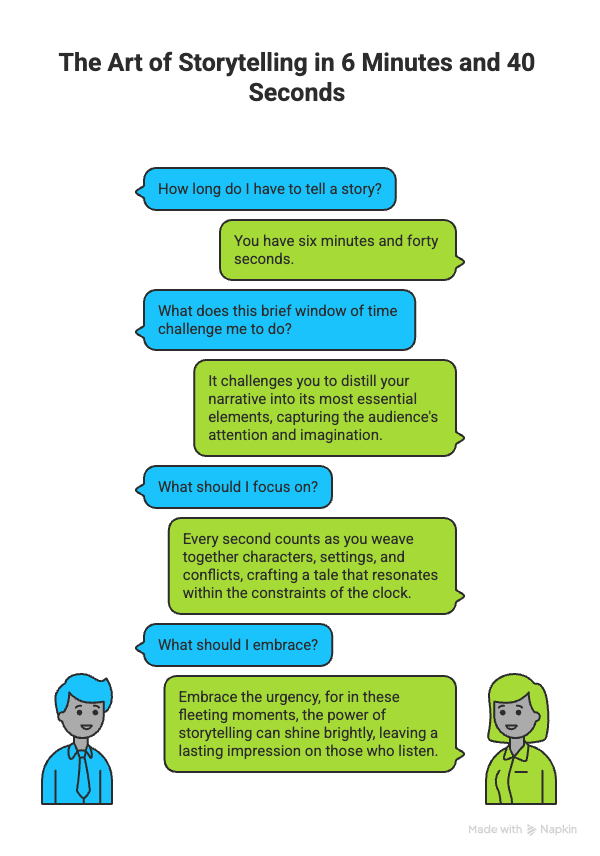
You have six minutes and forty seconds to tell a story.
Redick used this as a team exercise. Players and coaches put together short, personal presentations—where they grew up, moments that shaped them, people who influenced their lives, their favorite memories, their passions outside of basketball. Not contract talk. Not schemes. Not stats.
Human stuff.
According to Redick, it only took a few minutes per person for the room to shift. You weren’t just looking at a point guard or an assistant coach anymore—you were seeing a kid from a small town, a parent, a survivor of something hard, a person with quirky hobbies and big fears and bigger dreams. Vulnerability, creativity, and connection were baked right into the format.
That’s the real magic of PechaKucha: it forces us to be human and concise at the same time.
From a leadership perspective, a tool like this does a few powerful things:
It forces clarity. With the clock ticking, you have to decide what actually matters. No jargon, no 30-minute preamble—just the core of your story.
It breaks the routine. Most team meetings are predictable and, frankly, forgettable. PechaKucha cuts through that. It’s unexpected, a little uncomfortable, and therefore memorable.
It deepens relationships. People don’t bond over dashboards and status updates. They bond over stories. Once you’ve heard someone’s background or a defining moment from their life, you can’t help but see them differently.
It pulls out creativity. Give people constraints, and they get inventive. Images, humor, metaphors—the format nudges people to show sides of themselves that rarely surface in a work or team setting.
The result for Redick and the Lakers wasn’t just a fun activity. It built trust. It created inside jokes. It reminded everyone that behind the jersey and the title is a person who wants to be seen and understood.
And that applies far beyond the NBA.
Whether you’re leading a company, a nonprofit, a classroom, or a small team, the principle is the same: people respond to stories, not spreadsheets. If you want a stronger culture, better communication, and deeper trust, you don’t always need a new platform or a big offsite.
Sometimes you just need six minutes, twenty slides, and the courage to let people really see each other.